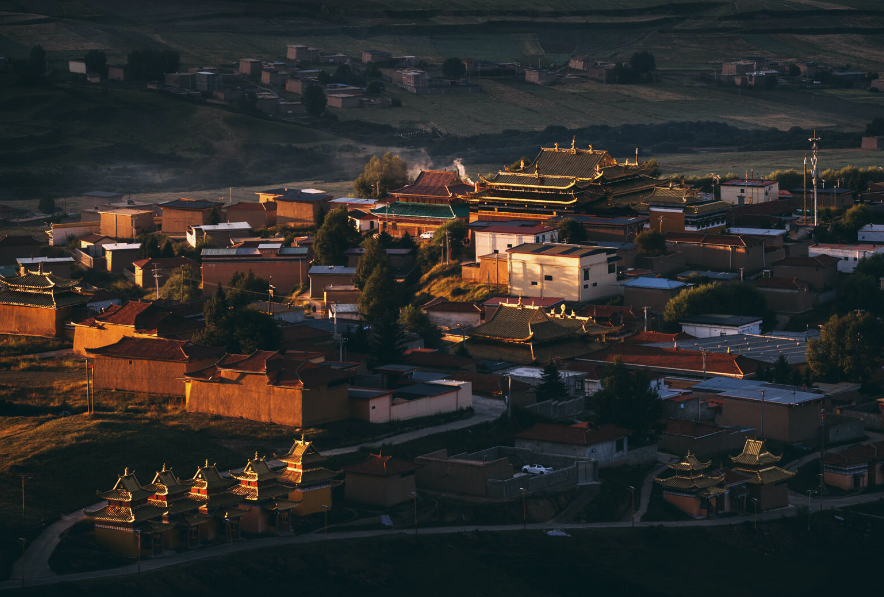
For most of China's recorded history, the Hexi Corridor was the only way west. This narrow strip of land between the Qilian Mountains and the Gobi Desert — no more than a few dozen kilometres wide in places — carried everything that moved between the Chinese heartland and Central Asia: silk, horses, Buddhism, armies, diplomats, and merchants. The Great Wall extended along its southern edge. The Dunhuang oasis sat at its western end like a final outpost before the desert swallowed the road entirely.
Today the same corridor can be traced by bullet train and road in a week, and the density of what it holds — canyon landscapes, rainbow geology, an intact Ming dynasty fortress, and the most celebrated cave art in China — makes it one of the most varied and underrated journeys available in the country.
Lanzhou is not the point of this trip, but it rewards a few hours. The city sits in a narrow river valley along the Yellow River, and its beef noodle soup — hand-pulled, served in a clear broth with sliced radish and a slick of chilli oil — is one of the benchmarks of Chinese noodle culture. The Yellow River itself is worth a walk: the waterwheel park at dusk, the lamian stalls along the riverbank, the particular light that falls on the valley walls at the end of the day. An early night in preparation for the journey west.

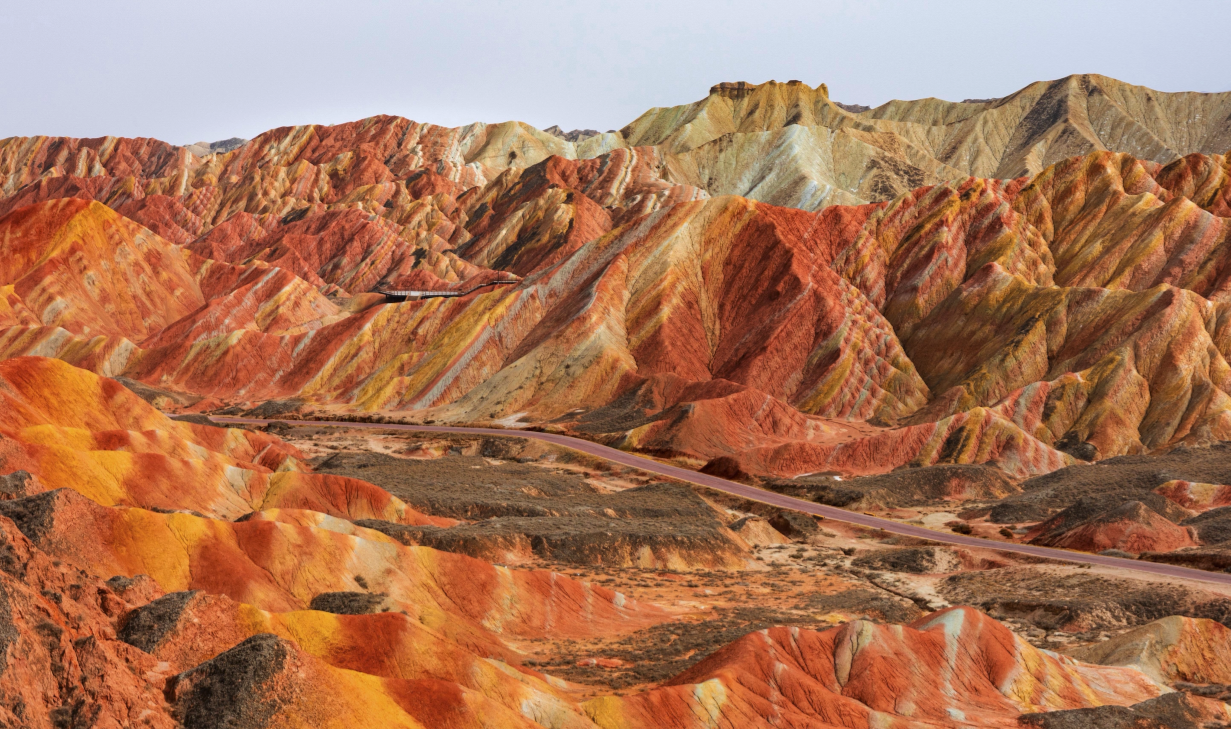
Board a morning bullet train to Zhangye, a Silk Road city that Marco Polo described at length and which most modern travellers still overlook. Your journey begins at Pingshan Grand Canyon, a red sandstone gorge of narrow corridors, sculpted rock walls, and colour that shifts through ochre, rust, and deep burgundy depending on the light.

Begin at the Giant Buddha Temple, home to a 34-metre reclining Buddha surrounded by an array of clay disciples arranged in the dimly lit hall beside him. Continue first to Binggou Danxia, a smaller and quieter formation of eroded red sandstone cliffs followed by the main show at Zhangye Danxia National Geopark. Explore Zhangye's layered rainbow hills of mineral-stained sandstone that are among the most photogenic landscapes in China and change colour hour by hour as the sun moves across the sky.

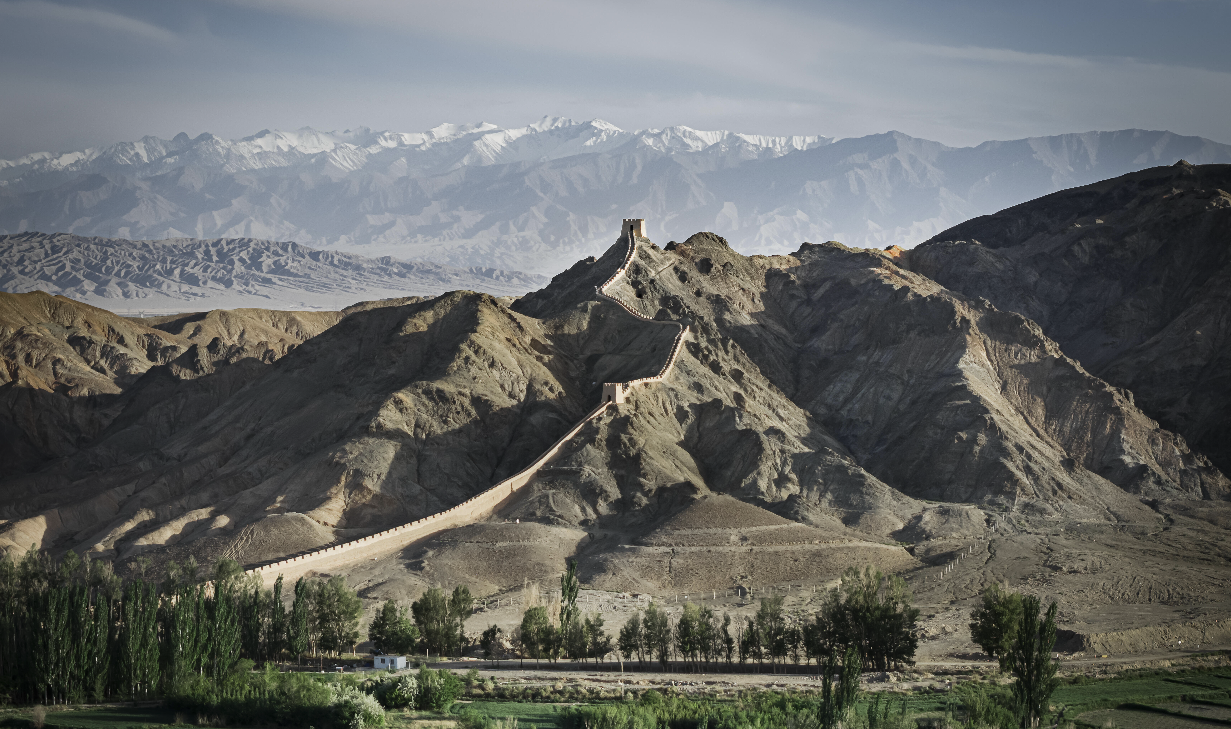
Drive west to Jiayuguan — the fortress that marked the western end of the Ming Great Wall and, for many travellers in imperial China, the last point of civilisation before exile into the unknown. The fort itself is extraordinarily well-preserved: rammed earth towers, vaulted gateways, and a theatrical layout that was designed as much to impress as to defend.
The drive into Dunhuang crosses open desert and arrives at an oasis city that has been welcoming travellers for over two thousand years. The afternoon is deliberately unhurried — a walk through Shazhou Night Market, time for a Dunhuang-style painting activity if the group is inclined, and a slow afternoon at your accommodation.


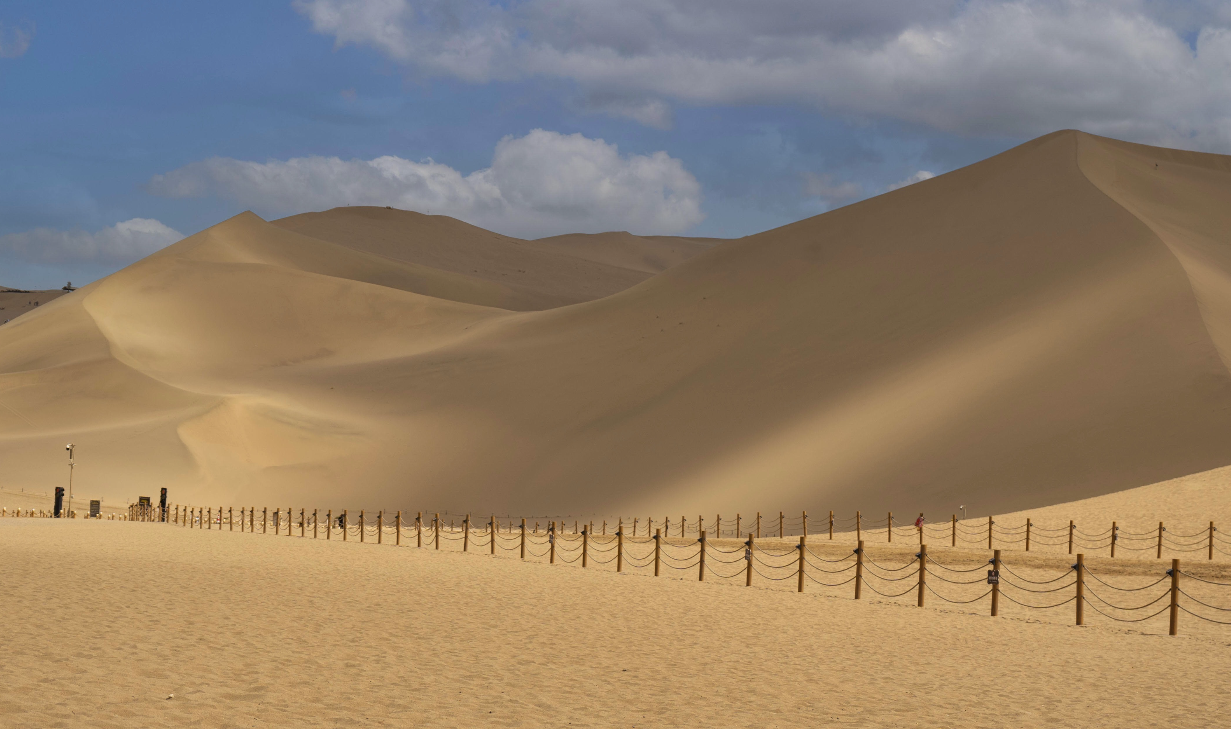
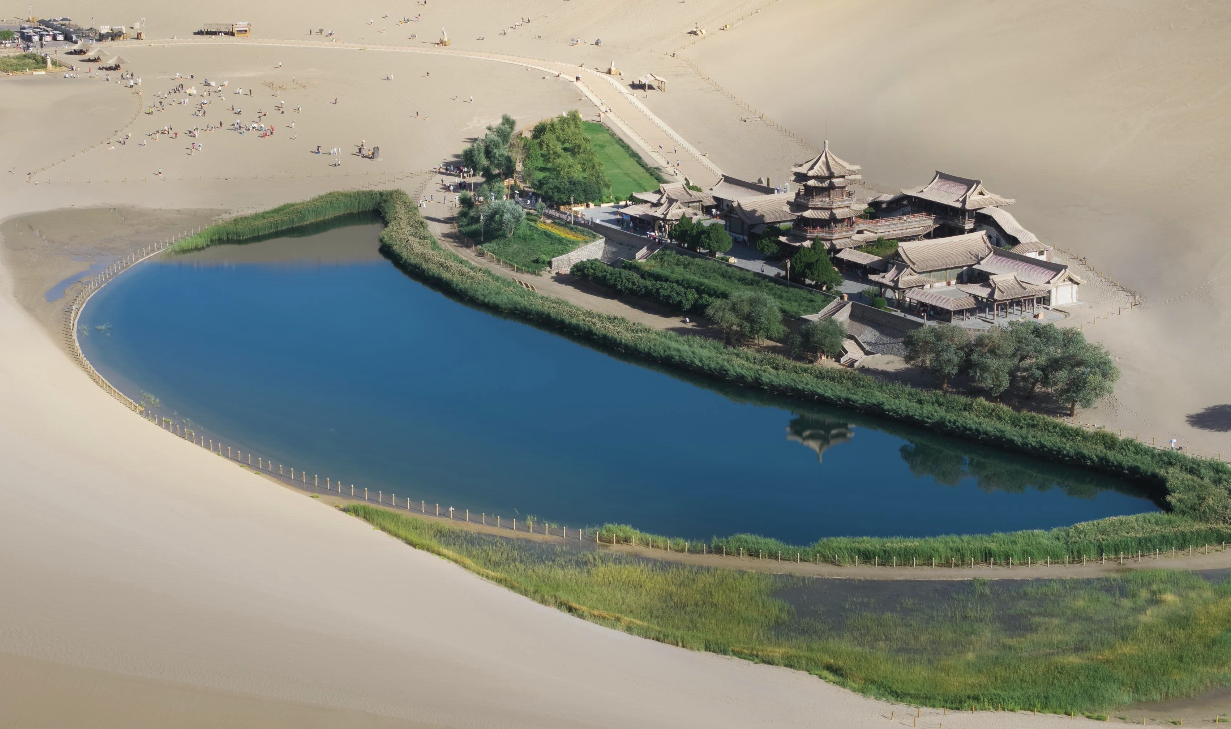
The Mogao Grottoes are one of the greatest concentrations of Buddhist art in the world — 492 caves containing murals and sculptures spanning a thousand years of Chinese history. Arrive early and allow time; the experience is unhurried and rewards those who slow down inside each cave. In the afternoon, the Mingsha Sand Dunes rise at the edge of town — a camel ride at golden hour is the classic approach, though the dunes are equally rewarding on foot. Crescent Moon Spring, a sliver of water that has survived at the base of the dunes for centuries despite the surrounding desert, is worth a stop before dinner among the dunes.
A final morning at Yumen Pass, the Han dynasty gateway through which silk and jade once moved in opposite directions, now a low ruin standing alone in an empty desert. What remains is modest by any measure: a few metres of rammed earth, eroded but still standing after two thousand years. The emptiness around it is not a absence of something — it is the point. No monument survives its context intact, and Yumen Pass, stripped of everything that once gave it meaning, becomes something more resonant than a restored site ever could. Transfer to Dunhuang airport for your onward connection.